Moon Phase Calendar
This free moon phase calendar shows the moon's phase for every day of any month from 1900 to 2100. Days when less than 15% of the moon is lit get a dark sky highlight, so you can pick the best nights for stargazing or astrophotography around each new moon. Tap any day for its phase name and illumination percentage. Switch to the Southern Hemisphere to flip the moon icons to match your sky. It runs in your browser, so nothing is uploaded and there is nothing to sign up for.
How to read the moon phase calendar
- Find your month - the calendar opens on the current month. Use the arrows to move one month at a time, or tap the month name to pick any month and year from 1900 to 2100.
- Read the moons - every day has a small moon showing how much of it is lit. A round pale disc is a full moon, a solid dark one is a new moon, and the shapes in between are the crescents, quarters and gibbous phases.
- Tap a day - the card under the calendar shows the date, the phase name (for example Waning Gibbous) and the percentage of the moon that is illuminated.
- Pick your hemisphere - use the Northern or Southern switch at the bottom so the moons look the way they do from where you live.
This is a monthly moon phase calendar: every phase is worked out for the middle of the day (12:00 local time) on each date. To keep a copy, take a screenshot of the month.
What are dark sky days?
A dark sky day is a day when less than 15% of the moon is lit. With so little moonlight, faint stars, the Milky Way and deep-sky objects are easiest to see and photograph. On the calendar these days have a green background, and they cluster around each new moon (so they double as a quick list of new moon dates), a few nights before and after it. Cloud cover and the time the moon rises and sets also matter, and this calendar does not show them: it only tells you how much of the moon is lit.
Moon phases in the Southern Hemisphere
The phase and the date are the same for everyone, but the moon looks mirrored between the two hemispheres. In the north a waxing moon is lit on the right; in the south it is lit on the left. The Southern switch flips every moon icon so the calendar matches what you see in the sky. It changes only the picture, not the dates or the percentages.
Best moon phase for stargazing and astrophotography
| Moon phase | Good for |
|---|---|
| New Moon and thin crescents (dark sky days) | Faint stars, the Milky Way, nebulae and galaxies |
| First Quarter and Last Quarter | Moon surface detail along the shadow line; bright planets |
| Gibbous moons | Bright planets and double stars; the moon washes out dim targets |
| Full Moon | The moon itself and very bright objects; the worst night for faint ones |
How the moon phases are calculated
The calendar works out the position of the Sun and the Moon for each day with standard astronomy formulas, then measures the angle between them. That angle gives the phase name and how much of the moon is lit. The calculation happens on your device, needs no location and sends nothing anywhere. The percentages are accurate to within about a percent, which is finer than the calendar can show.
Frequently Asked Questions
Are moon phases different in the southern hemisphere?
The phase and the date are the same everywhere on Earth: a full moon is a full moon for everyone at once. What changes is the look. From the Southern Hemisphere the moon is upside down compared with the north, so the lit side of a waxing moon is on the left and the crescent curves the other way. The Southern toggle mirrors every moon icon to match.
Is a new moon good for stargazing?
Yes. Around the new moon the sky has no moonlight, so faint stars, the Milky Way and deep-sky objects stand out best. The dark sky highlight covers the days when less than 15% of the moon is lit, which is a few nights either side of the new moon, not just the single day.
Can you stargaze with a full moon?
You can, but the bright moon washes out faint stars and galaxies. A full moon is still good for the moon itself, bright planets and double stars. For dim targets, pick a highlighted dark sky day instead.
What moon phase is best for astrophotography?
For faint targets like nebulae, galaxies and the Milky Way, the new moon and the nights just before and after it are best, because there is little moonlight to fog the exposure. The highlighted dark sky days on the calendar are those nights. For photos of the moon itself, a crescent or quarter moon shows more surface detail than a full moon.
How many moon phases are there in a month?
There are eight main phases: New Moon, Waxing Crescent, First Quarter, Waxing Gibbous, Full Moon, Waning Gibbous, Last Quarter and Waning Crescent. A cycle takes about 29.5 days, so most calendar months show one full cycle and sometimes a bit more.
What was the moon phase when I was born?
Use the month and year picker: tap the month name, choose your birth month and year (any year from 1900 to 2100), then tap your birth day to see its phase name and how much of the moon was lit.
Recommended
-
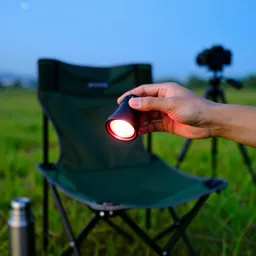 Celestron Red LED Headlamp
Red light keeps your eyes dark-adapted on new-moon nights.
-
 NightWatch: A Practical Guide to Viewing the Universe
Know what to look for once the sky goes dark.
-
 Celestron StarSense Explorer LT 114AZ Telescope
Point your phone at the sky and it guides you to the target.
Helps keep the tools free. ✨
Images are for illustration only. As an Amazon Associate I earn from qualifying purchases.